On December 2018, new generation of Spider-Man has appeared as an animation format with the title ” Spider-Man: Into the Spider-Verse.”
Directed by , Peter Ramsey, Bob Persichetti and Rodney Rothman, Spider-Man: Into the Spider-Verse has won several noticeable awards like ADG Excellence in Production Design Awards- Animated Film and Blimp Award for Favorite Animated Movie. This animation even won Best Animated Film from Chicago, Detroit, Los Angeles and New York film critics groups, along with nominations at the Critic’s Choice, Golden Globe and Annie Awards even before the film was released.
Peter Parker, known as the Spider-Man in people’s memory and even in my memory, it was somehow awkward to see a new Spider-Man in a totally different way. Previous Spider-Man Series were acted by Human not created and shown by animation.
In Spider-Man Into the Spider-Verse broke some traditions from the previous Spider-Man such as the new character was black person, getting through the crisis are done by collaboration with other heroes unlike the previous film, it was done only by Spider-Man himself. However, procedure of becoming a Spider-Man was quiet the same. Miles Morales, the Main Character in the animation got bitten by an infected spider which gave him a super power just like the Spider-Man.
The plot of the story was really interesting and enjoyable. Creating scenes where Peter Parker, the original Spider-Man and Mile Morales, the new Spider-Man meets. It was quiet shocking enough that 2 Spider-Man existing in a film, but soon another Spider-Woman appeared where my head was already enjoying too much. However, for me, I guess it would have been much better if there was no other super heroes in the animation, especially the robot girl, the scenes which the character created was total disaster to the anime which was quiet disappointing(Maybe it was just the characteristic of that hero, but still, it didn’t match with this animation). Still, the plot itself was very clear and easy to understand where it makes people to enjoy the animation just like reading his/her favourite comic book.
The cinematography was excellent in all ways. I knew that it is an animation story based on Comic book and I realized that director put comic book features inside the transition scene of the animation where the texture of the scene seems like a cartoon page. Talking about special effects, actually the film itself is the special effect where from the walking, talking and action scenes were all created by computer effects. Moreover, I was amazed to know that, to keep the tone of each character, the director got Shameik Moore (Black American) to voice over Miles Morales and Jake Johnson (White American) to take Peter Parker’s role. Like this, Spider-Man: Into the Spider-Verse, considered every single elements to make the animation perfect.
With all the enjoyable aspects, Spider-Man: Into the Spider-Verse is a very interesting Fantasy animation which is a must to watch especially for the cartoon lovers.
Spider-Man: Into the Spider-Verse, will lead you into the new generation of Spider-Man.
A few months after its run in cinemas, Netflix has acquired the rights of the award winning Taiwanese film Dear Ex. The film has had its fair share of success as it gained awards in different shows and festivals inside and outside of Asia. It is a gay themed drama who follows the lives of three people who are linked by a fourth person, Sung Chengyuan, a professor who died of cancer right before the film started leaving his wife, son and his male lover in a conflict. As the film opens, we see how enraged Liu Sanlian, the wife, as she waits outside Ah Jie’s house with her son after she found out that Sung Chengyuan named his male lover his life insurance beneficiary. Sanlian then proceeds to throw homophobic slurs to Ah Jie to enrage him further while mocking his sexuality and explains how they need the money for her son’s education as they were planning to send him to Canada for his studies. As his mother continues to enrage Ah Jie further, Chengxi sulks in the corner as he was obviously fed up with the harsh reality he’s involved. In the middle of the argument, Sanlian found out how Chengyuan called Ah Jie his husband making her the mistress of the situation. Jie then later taunts Sanlian and uses it as his ace. Their conflict continues as Chengxi decided to rebel against his mom because she found her behavior crazy and overbearing resulting to him staying with Ah Jie in his dirty flat. No matter how hard his mother persuaded him to come back he still refused and avoids contact with his mother. Sanlian, full of rage tells his son to never come back. Chengxi wanted to know more about the man who broke his family and made his mother a pitiful looking housewife. But as the time passed and as Chengxi learned how Ah Jie’s life really is with the help of the flashbacks the man provided, Chengxi saw Ah Jie in a different light. A light where there are shocking plot twists he wasn’t expecting. The film was filled with flashbacks from Ah Jie and Chengyuan’ life together as partners. It was showed how much their love helped them overcome all the struggles they have in their life. Chengxi then learns how much Ah Jie loved his father and its depth. Sanlian then went such lengths to ruin Ah Jie’s life and hurt him with every possible thing she can think of, including his mom. But as the film ended, Sanlian realized how much they both changed their lives, even for the better.
Taiwan is the first ever country in all of Asia to legalize same sex marriage last 2017 (Haas, 2017). The film has gained recognition and awards in Taipei Film Festival and Golden Horse Film Festival and helped the marketing of the film. The color palette of the film showed the different emotions and moods of the three characters present in the film and how much it changes. With each scenes of the son, it was shown how rebellious he is with its color palette.
Dear Ex is the debut film of the directors, Mag Hsu and Hsu Chih-yen. Mag Hsu, is a screenwriter and got the idea for the film from one of her past relationships. While on the other hand, Hsu Chih-yen is a music video director before his debut as a filmmaker. Both used their fortes to create such a masterpiece.
The film is anchored to the Gay and Lesbian Criticism as the movie revolved around the gay stereotypes and how apparent discrimination is. These stereotypes include how much gays are taunted, discriminated, insulted and ridiculed in these films. The representation of gays in films have always been a laughing stock since the start of the film era (Piepenburg, 2018). It was said that gay representation in films is getting worse.
Official Poster of The Blossoming of Maximo Oliveros (Ang Pagdadalaga ni Maximo Oliveros)
Official Trailer of The Blossoming of Maximo Oliveros (Ang Pagdadalaga ni Maximo Oliveros)
In a world where you need to deal with your widowed-criminal father Mang Paco (Soliman Cruz) and two older brothers Bogs (Ping Medina) and Boy (Neil Ryan Sese ) who are involved in an illegal gambling operation and selling stolen mobile phones is no doubt execrable. That is the life that Maxi (Nathan Lopez), an effeminate 12-year old boy, face in the slums of Manila. At a very young age, Maxi knows that he is different from stereotypical boys who love to play robots or physical games. He opted to do household chores such as cooking, washing dishes, and cleaning the house which normally being done or assigned to do by girls or females. Despite of the fact that his family wholeheartedly accepted his “differences” such as putting make up all over his face, cross-dressing habits, walk like a beauty queen whenever he goes out of his house, dance as if his body is fluid, unique personality and out of the normal norms in the society, Maxi never felt less of a person. His jolly personality serves as a light in the family making their house a home.
However, as a gay living in a patriarchal society receiving insulted words on a daily basis has been part of Maxi’s life until one day there was a group of men who viciously attacked him and he was saved by his knight and shining armor Victor (JR Valentin), a rookie cop who believes that truth will always prevail no matter what happens and he takes his work with full integrity. That moment was the very first time Maxi fell in love. From that day on, although his schedule is quite hectic because he serves his family, Maxi still able to manage his time by doing household chores and seeing Victor. There are so many scenes that are worth mentioning. One is when his brother Bogs (Ping Medina) got into a fight and killed a student that eventually Victor was assigned to handle the case. When Bogs was imprisoned, his father Mang Paco was screaming on top of his lungs and very upset. He ensured that Victor will pay for it until they met him on a one late night and his troublemaker boys ambushed him. The following day, Maxi thought of visiting Victor until he saw Victor’s bruised face.
Maxi felt guilty because he already knew that there was a commotion between his family and Victor. The only thing that he could do was to take care of victor so he prepared a brunch meal for him and he also cleaned the house. Little did he realize that his innocent eyes witness Victor’s butt while taking a bath but because he is innocent, he did not take advantage the situation but rather he kiss Victor cheek and that was the very first time that he felt so good in the most literal sense. He went home with so much joy in his heart, but what welcomes him at home was a slap on his face from his father Mang Paco. His dad found out that he went to Victor’s place again even if he already reprimanded him not to go there. Victor was stuck in a situation between choosing the love of his life or his family. Another miserable night happened for the Oliveros family. Mang Paco met Victor and his former ex-friend who happens to be the newly assigned chief cop in their municipality New Sergeant (Bodjie Pascua). Based on that particular scene it transcends that the two had a misunderstanding before that lead to hating one another. New Sergeant insisted that in order for Victor to be promoted and get a high rank in his career he must kill Mang Paco but Victor cannot take it so New Sergeant killed Mang Paco and Maxi witnessed it and what makes it worse is that Victor did not do anything. Maxi felt like Victor abandoned him. And violence continues. Bogs was able to get out of the imprisonment and he alongside his brother Boy made a decision to find New Sergeant and make him pay for killing his dad but apparently the it was not shown on the movie if they succeeded or not.
One of the most memorable lines I will never forget in this film is when Victor said that “there are so many evil men in the world and sometimes you have to play with their game“, but Maxi said “yes, there are so many evil men but I only had one father”. I like how it ends the film with so much positivism. First, Maxi was able to surpass all those hardships in life including his poppy love for Victor, as well as how he recovered from his father’s death. This shows that he became a better person. Genuine love for one another has been the heartfelt scene among the Oliveros brothers. Bogs ironed Maxi’s uniform while Boy prepared food for breakfast as well as something that Maxi can bring in school. I also love the scene where Bogs said that Maxi was so beautiful and when Maxi went to their mini-altar and touched his parents’ picture. This depicts Filipino culture – the love for our family.
This film absolutely adapts the queer theory approach of
applying what is non-normative against the heterosexual or standard norm of a
society. One good example is in the Philippines, it is too difficult to achieve
acceptance especially that we mostly exercise patriarchal mentality. But as
time goes by people get to tolerate LGBTQ and who knows someday we may achieve total
development for humanity.
The great
director Auraeus Solito as well as him entire team who made this film The Blossoming of Maximo Oliveros
received special awards from different award giving bodies both local and
international such as Special Citation, Best Production Design as well as Special
Jury Prize winner in the first Cinemalaya independent film festival in 2005, Best
Actor (Nathan Lopez), Golden Lady Harimaguada also known as Best Director (Auraeus
Solito) in Las Palmas Film Festival in Spain 2016, Best Picture in Gawad Urian
Awards 2016, Teddy Award and Glass Bear – Special Mention for Best Feature Film
in Berlin International Film Festival 2016, and Gawad Urian Awards’ Best
Filipino Film of the Decade in 2010.
“Easy A” a film directed by Will Gluck, a 2010 American teen comedy film starring Emma Stone. Emma Stone plays a high-school student who breaks taboos without really breaking them. That makes her the perfect heroine for a movie that knows the rules of high-school comedies, tweaks them, but still colors within the lines.
Writer Bert V. Royal alternates between genuinely witty touches and dialogue that just has the rhythm of wit. Between the clever dialogues and the equally breathless editing, the film’s characters scarcely have room to breathe.
Emma being Olive Penderghast, from East Ojai High School who is nobody at all until such time that there were rumors spread about her losing her virginity. And the biggest thing about the school is that it is scandalous to lose one’s virginity in high school.
She was overheard by Marianne played by Amanda Bynes, a self-righteous type of women who spread rumors without fully knowing the truth and pass it like an object.
But Stone chooses to let some false rumors about her sexual promiscuity spread, it’s not just about she does not care at all but she somehow likes the attention. But the truth behind that false rumor is that she is just simply embarrassed to admit that she spent the whole weekends at home alone, and just come up a story that she lost her virginity to some college guy. As she became the icon turns to someone who falsely accused, she started to wear a red “A” in tribute to Hawthorne’s sexual outcast and the Scarlet Letter.
The plot unrolls predictably, but beneath the conspiracy, thinly conceived religious bad guys, and hit-or-miss one-liners, Easy A has a deep concern with sexual double standards and the evading that awaits those who don’t conform to them, from gay kids to sexually assertive girls to dateless introvert boys. Emma Stone plays the part with the mix of sourness and vulnerability, drawing power from everyone’s false assumptions as she charms down the hallways one moment, appearing overwhelmed by the same assumptions the next.
Olive puts her fame to use. She has a gay friend named Brandon portrayed by Dan Byrd, who has been bullied at school because of his sexuality. By allowing word to get out that she and Brandon have shared blissful night, she is able to bring an end to the bullying of Dan.
Now that she had somehow an authority in school, she begins to issue of her Seal of Approval in and outside of her school, the misfits and untouchables in the student government, equipped them with the quality of being sexy.
The film shows how Emma Stone build up strong personality despite being called a lot of dirty names. The film provides examples of the attitude of both men and women. She does not care whether she is a woman she knows how to fight for herself. Isn’t it what feminists are trying to show? That every woman can stand on their own. But a lot of people are trying to argue that men cannot be in the same situation with women. Just like how easy A showed (Caprino K., 2017).
Easy A, like other good comedy films, it supplies with more or less conventional film. Emma Stone’s transformation is introduced by gossip. She wanted the power to improve not just her reputations, but the others as well. And she also had the chance to help the relationship between his favorite professor, Mr. Griffith played by Thomas Haden Church and his wife, which is their guidance counselor in school.
The movie became hit it is not just because it is funny, but it is also smart. Because when Olive begins wearing the scarlet letter “A” on her clothes, adopt the idea from the Hawthome novel which is the Scarlet Heart that their professor explained at the beginning of the film.
Fight Club is an action satire 1999 film directed by David Fincher and is based on a 1996 novel written by Chuck Palahniuk.
The film stars Academy Award Nominee Brad Pitt, Academy Award Nominee Helena Bonham Carter, and Academy Award Nominee Edwan Norton.
The film was considered a disappointment at the box office, only earning $40 million dollars more than what they have spent. It became controversial, with it being praised for the acting and theme but being outweighed by the violence it possessed. But after it’s successful DVD release, the film Fight Club grew to have a cult following.
The film was nominated for Best Sound Editing in the 2000 Academy Awards. The Online Film Critics Society listed Fight Club as one of the top ten films for 1999 and nominated the film for having the Best Adapted Screenplay, Best Editing, Best Actor, Best Director, and for Best Film. Helena Bonham Carter, who played as Edwan Norton’s character’s love interest, won the Best British Actress during the 2000 Empire Award.
Image retrieved from Google.
The film starts with the unnamed Narrator who develops severe insomnia. He stumbles across a support group for patients of testicular cancer and poses as a sufferer of the illness too. Later that night, he finally gets to sleep. He enjoys attending the testicular cancer support groups and attends other support groups for other illnesses which he does not have. After a number of sessions, he realizes that another person has been doing the same thing he has and is bothered by her because it reminds him of his dishonesty. They later talk and agree to split the support groups fairly and give each other their contact details.
Image retrieved from Google.
During a flight home, he converses with soap salesman Tyler Durden. When the Narrator arrives home he is surprised to find out that his apartment had been destroyed due to an explosion. He debates whether he should contact Marla, the woman he met during the support groups, or the soap salesman Tyler, he chooses the later. After getting along in a bar, they go outside and Tyler asks the Narrator to punch him which resulted to them fistfighting.
Image retrieved from Google.
Due to having no where else to live, the Narrator accepts Tyler’s invitation to live in with him, which his home is situated in an industrial wasteland. They return to the parking lot on some nights to start fist fighting which later attracted a growing attention of men. These fistfights are then moved to a bar’s basement where Fight Club was born, a ‘support group’ for men to meet and beat each other up with consent as some sort of release.
Image retrieved from Google.
The Narrator receives a phone call from Marla saying that she has overdosed on pills and desperately needs help, he ignores her but Tyler goes and helps her. Both Marla and Tyler enter a sexual relationship and Tyler tells the Narrator not to talk to Marla about him. Later, the Narrator goes to work to quit his jobs and also threatens his boss.
Image retrieved from Google.
Fight clubs have moved and grown in different parts of the country. Tyler starts Project Mayhem without the Narrator’s knowledge. The members of Project Mayhem become involved in violent acts which the Narrator does not approve off and is starting to bother him. He talks to Tyler about him feeling left out of the circle and an angry Tyler leaves the house. When he leaves and the Narrator is in deep thought, he realizes that Tyler was behind the explosion at his apartment.
One of the members of Project Mayhem gets killed due to the police’s efforts, the Narrator personally tries to stop the group. He finds his way to Tyler who has left paper trails. In one of the city he goes to to find Tyler, a Project Mayhem member who he is not familiar to him greets him as Tyler. Surprised and dumbfounded, the Narrator phones Marla and she tells him that she believes in the fact that he is Tyler. Tyler, out of nowhere, appears in the Narrator’s room and explains to him that he is a result of the Narrator’s dissociated personality disorder. The Narrator would become Tyler when he was sleeping.
Image retrieved from Google.
When the Narrator returns to Tyler’s home he finds his plans of trying to erase all debt by exploding building that have credit records. He warns Marla that she is in danger and apologizes to her but she admits to being tired of his conflicting behaviour. The Narrator calls the police to warn them but they belong to the Project Mayhem group. In an attempt to stop the explosives, he disarms one but gets caught by Tyler and is tied to a chair and held at gunpoint. Finally, the Narrator realizes that him and Tyler are the same person and that he is in control. He points the gun to his own mouth and shoots it through his cheek which causes Tyler to collapse with the bullet going through his head. He disappears. Marla is brought to the building by Project Mayhem members and both hold hands as they watch buildings explode and collapse.
The film Fight Club tells the story of an apolitical subject. In their theory, Comolli and Narboni noted that ideology is a product of a system and that all films are political. The first task that filmmakers must set in creating films is to make sure they depict reality well. Fight Club’s structure and form have turned away from the traditional way the audience can depict reality.
We can apply Karl Marx’s theory to the film. All men who feel like they have been shunned by society due to not being ideal, by working too hard, are not seen to be as equals to other men, men who feel oppressed join the Fight Club to bring themselves closer to an economic equality.
Louis Giannetti (2008) said that ideology is a set of rules or guidelines that people should follow to be accepted in their society. The Fight Club represent two very extreme characters, the Narrator who is your everyday Joe–goes to work at a corporate job, follows the rules, but ends up being bored with his routine life and everything changes once he suffers from insomnia and meets Tyler. Tyler brings out the bad side of the Narrator through starting the fight club. They end up going against society and bringing havoc to it through Tyler’s new group Project Mayhem.
Image retrieved from Google
The film challenges ideas such as the idea of masculinity and consumer culture. It goes against everything Hollywood has stood (and is) standing for.
Reference:
Giannetti, L. D., & Leach, J. (2008). Understanding movies. Toronto: Pearson Prentice Hall.
Queer stands
for many other things than many of the same types of people and cultural
projects are provided with different alternatives to perform what they want to
deliver to a movie (Kim & Hong, 2007). In this beyond the knowledge within
the movie studies indicating that these are sites of queer unification and
communication, higher appreciation of the role of time and generation within
the queer sexuality analysis (Binnie & Klesse, 2018). Asian gay
representation lies in the process of come into being who they are and about
revealing their real identity and blood association (Yue, 2000). International
films interest in art theaters from Hong Kong is situated to a small group of
directors, especially the exceptionally good of Wong Kar-wai, who won the Best
Director award for Happy Together at Cannes in 1997 (KHOO, 2014). 34th Golden
Horse Awards Best Cinematography. 7th Arizona International Film Festival Audience
Award – Most Popular Foreign Film.17th Hong Kong Film Awards Best Actor Tony
Leung. Starring Leslie Cheung and Tony Leung Chiu-wai, that describing the
chaotic love romance. In Cantonese with English subtitles. Soundtrack and music
by Danny Chung and Tang Siu-lam. The film recognizes positive reviews and
reviewed in several movie festivals; it was nominated for the Palme d’Or and
won the Best Director at the 1997 Cannes Film Festival. However, in this film
Wong explains how we can tell story on film. This is the story of a gay couple
who is sad and uncooperative about it. Happy Together is part of a cultural
institution that enables production of impartiality and sustainability (Jinah
Kim & Atanasoski, 2017).
Hong
Kong filmmaker Wong Kar-Wai, written, directed and produced a Happy Together
movie. Ho Po-wing (Leslie Cheung) and Lai Yiu-fai (Tony Leung Chiu-wai), a
couple from Hong Kong’s pre-handover, visit Argentina in the hope of altering
their bad relationships. The two have an example of abuse, followed by shame
and unity. Ho Po-wing together with his partner going in a ride to explore
adventure, suddenly there was a miscommunication that caused an argument and
break up.
But,
Fai has a strong fighting spirit he did not lose hope instead he works in a
tango bar as a door man, assistant cook in a Chinese restaurant where he met
and became a friend of Zhang from Taiwan and in slaughterhouse trying to save
money for his daily needs (survival) and also saving money for his plan to go
back to Hong Kong. Ho became miserable due to his work as a prostitute. Until
he went to Fai apartment seeking help because of his bruises to his body and
bleeding head. Fai initiated to bring Ho to the hospital and went back to his
apartment. Here you can see the love of Fai to Ho despite of what happened
during the past. Fai take care of him everything such as cleaning Ho’s body,
cooking and serving food because Ho cannot use his two hands due to his
bondage. While there sleeping, Ho went to Fai wants to have a sexual
relationship, but Fai refused him. Ho insisting, but again Fai warned Ho if he
will not stop doing it he will force him to expel from his apartment. After Ho
was healed, he continued his pickup boy lifestyle and left Fai.
Fai spent all his time on
his job and his friend Zhang that he felt the happiness for that moment. But
soon, his friend leaving for good and this is the heart felt feeling of saying
goodbye. Because Zhang is Ho’s opposite. Fai went to Taiwan before heading to
Hong Kong, hoping to meet him again, sadly he did not, but he saw his family
that one day if he wants to visit him he knew the place and never introduce
himself to them. For the actors they did great for this movie, they emphasized
the action in every scene where in you can feel the emotions.
There is not much conversations “Happy Together,”
but more on action scenes and elaborating the experiences of the characters. The
director divided the scenes by using color density from black and white to
color. Thus, uses his camera in a natural way as if he had just dropped his
characters and did not intend something. This film expands and slow down camera
speeds, using short freeze frames in the middle of a scene, creates ideas and glimpse
instead of imitating the very familiar standards of movie story. It will be
happy and enthusiastic. For some shots of things and moments stands for a kind
of idealized romantic possible for them in their sorrow. At the end, Happy
Together visualize in its art work as a story of reflection of a gay couple
that in all circumstances in life there is hope. There is a turning point in
life that you can be able to decide for the improvement of your situation. This
film is an ordinary story for a couple, but in this story is different from the
common relationship. Nevertheless, this is all about the feeling of same sex
who were in a relationship that deals in their setting up and expressing their
thoughts and to live in this world as equal human being and there is nothing to
do with others (Díez & Dion, 2018).
Queer theory for this film “Happy Together” same sex couple or having in a relationship with gay or lesbian, defines and identifies the kind of norms of sexuality, whether it is bad or good, physically and mentally (lisahunter, 2019). In this new generation, we have seen and heard many stories of this kind of relationship and about the coming out from their closet. They are fully brave enough by expressing their secret identity without any discomfort to themselves (Michaelson, 2018). Importantly, is the understanding of the society in their behavior in terms of communication and preferences, thus it’s their own choice of knowing what they want to be (Ybarra, Mitchell, Ybarra & Mitchell, 2016). Additionally, queer people are in the situation of identity crisis, where they seek their identity and want to have someone to support, accept and love them because some do not care about the gender crisis and they want to belong to the society (Rosenberg, 2018). Some older men declare that they do not appear due to social stigma, until a threatening attraction implies doing so such as the doubt of their family and friends, but the younger men who came out during the new era, especially the internet world have some exits that can be relied upon and easy to access (Lewis,2012). The “Happy Together” film is a queer product with all the characteristics of the characters and the totality of the scenes based on it. Even at the end of the story no one knew they were gay couple, Fai and Ho they do not introduce themselves as couple instead they are friends. In this film Fai and Ho do not want to reveal their secret identity until the end of the story. Still, it is part of our culture, belief about coming out. It is the norms of the society that can accept of who we are and the way we interpret our lives (Clark, 2014).
References:
Binnie, J., & Klesse, C. (2018). The politics of age and
generation at the GAZE International LGBT Film Festival in Dublin. Sociological
Review, 66(1), 191–206.
Clark, I.
(2014). International Society and China: The Power of Norms and the Norms of
Power. Chinese Journal of International Politics, 7(3), 315–340.
Díez, J., & Dion, M. L. (2018). New Media and Support for
Same-Sex Marriage. Latin American Research Review, 53(3), 466–484.
KHOO, O. (2014). Wong Kawaii: Pop Culture China and the Films
of Wong Kar-wai. Journal of Popular Culture, 47(4), 727–741.
Kim, J., & Hong, S. (2007). Queer cultural movements and
local counterpublics of sexuality: a case of Seoul Queer Films and Videos
Festival. Inter-Asia Cultural Studies, 8(4), 617–633.
Jinah Kim, & Atanasoski, N. (2017). Unhappy Desires and
Queer Postsocialist Futures: Hong Kong and Buenos Aires in Wong Kar-wai’s Happy
Together. American Quarterly, 69(3), 697–718.
Lewis, N. (2012). Remapping disclosure: gay men’s segmented
journeys of moving out and coming out. Social & Cultural Geography, 13(3),
211–231.
lisahunter. (2019). What a queer space is HPE, or is it yet?
Queer theory, sexualities and pedagogy. Sport, Education & Society, 24(1),
1–12.
Michaelson, J. (2018). Queering Martin Buber: Harry Hay’s
Erotic Dialogical. Shofar: An Interdisciplinary Journal of Jewish Studies,
36(3), 31–58.
Rosenberg, S. (2018). Coming In: Queer Narratives of Sexual Self-Discovery.
Journal of Homosexuality, 65(13), 1788–1816.
Ybarra, M., Mitchell, K., Ybarra, M. L., & Mitchell, K.
J. (2016). A National Study of Lesbian, Gay, Bisexual (LGB), and Non-LGB Youth
Sexual Behavior Online and In-Person. Archives of Sexual Behavior, 45(6),
1357–1372.
Korean War, a biggest tragedy in Korean history until now stays with the 3.8 parallel line between South and North Korea, used in various ways by politicians and as a popular theme in film industry. Mr. Park Gwang Hyun one of famous film director in Korea created This “Welcome To Dongmakgol” trying to break down the ideology life through the plot where ideology still exists as the main theme of the film by reproducing the experienced world in the past.
Welcome to Dongmakgol, a film made in year 2005, awarded by more than 10 film festival was director Park Gwang Hyun’s first successful film. The theme of the film was based on true background and timeline, however, the story was based on the play written by Mr. Jang Jin. However after this successful film there was no successful film made by Director Park.
During Korean War, an opposition of South and North Korea living with different societies under different political systems which shows the real ideological situation at that time, the town of Dongmakgol, which is deeply hidden somewhere in the valley of Taebaek mountain in Gangwon province, suddenly starts to become crowded because not only the North and South Koreans but also allies of US forces, including coalition forces, have struck at Dongmakgol at once. Where no rules nor ideology exists but all of a sudden different people enters Dongmakgol who opposes each other’s ideology. The content of the film is not explicitly political, but it becomes so through by the form and the structure (Comolli & Narboni, Cinema/ideology/criticism, pp690). The theme of the film, based on the era of Korean War itself makes the idea of political since “war” starts by opposing group of people.
Going back to the basic idea of ideology, according to Karl Heinrich Marx, social hierarchy makes the ideology meaningful where this idea became a basic idea of ideology in film industry in year 1960’s. The meanings in the film and the ideas formulated eventually has the idea of ideology. Ideology was first used in the study in 18th century by Antonie Destutt de Tracy’s Projet d’Eléments d’Idéologie, 1801. Where ideology made people to believe in something and make them feel and think a certain way. Continuously, this idea was applied in the field of film. Films are believed to reflect the fundamental beliefs of a society – ideologies (Phillips, 2005) where it says that film deals with the society and the society has its ideologies.
In Welcome to Dongmakgol, it seems like that no rules nor ideology exists in the village, however, by applying and considering the idea of Karl Marx, it is able to notice that ideology still exists in the Dongmakgol village. The town chief, worker and the guard divided into different social class and position already has the idea of ideology. The culture itself is surely a part of the ideology in the village. The body of ideology reflects the social needs and aspirations of an individual, a group, a class, or a culture. Ideology is a system of ideas, opinions or viewpoints (Pearson & Simpson 2001, pp231-237). Even though director Park said that he tried to break the ideology in the film’s plot, still the film itself couldn’t remove the total idea of ideology. Dongmakgol is actually a non-existing place in Korea but their livings, culture and the situation at that time mirrors the reality of Korean War and during the Korea War, everything was related with politics which is ideology itself. It is partly true that Welcome to Dongmakgol ignored the ideology at that time by creating its own world and idea, opposing to the situation at that time. Here the director wanted to bring the audience to another ideology world created by “Dongmakgol”. Dongmakgol itself, the style and content is apolitical but looking into the film itself, it deals directly to the political subject (Korean War).
Korean film, relating with ideology, many of the film dealt with the topic of South and North Korea since this two different country totally has opposing ideology, society and image. However, Welcome to Dongmakgol dealt with the same issue but the way how this film lead the idea of ideology differed from other films.
To point out one specific scene in the film, where the South and North Korean soldiers put the guns against each other in Dongmakgol village, the main character “yeoil” pulls out the pin of the hand grenades by her own curiosity. The soldiers throws the grenades into the grain warehouse where the grenades explodes, all of a sudden the sky was filled with popcorn. In this scene when the opposing soldiers put the gun against each other, it directly showed the ideology and the director depicted the reality of the Korean War. Where the idea of film maker’s first task was simply shown and performed without a doubt. However, the director turned the serious ideologies of South and North Korea into a cheap comedy by exploiting the popcorn scene. This, however is not just a cheap comedy scene but has an idea that the people in the scene are confronted with their own ideologies (ideal for constructing ideal society) even though they are already within the ideal society they have sought which is Dongmakgol village. It shows the intention of Director Park that in this utopia, (Dongmakgol) neither ideology nor the mirrors of reality can possess its power. The merging of ideology and film has permitted the endorsement of the dominant values that society approves of, thus the marginalization of other alternatives (Barthes) which in Welcome to Dongmakgol somehow created its own utopia putting values and meanings. Still, it does not harm the idea of mirroring the reality through the film.
As mentioned earlier, Welcome to Dongmakgol is not explicitly political but becomes through the form and structure. Also this film broke down the traditional way of depicting reality. Talking about depicting reality, to mainly focus on the Korean film industry of traditional way of depicting reality, traditional Korean film mainly focused on the tragedy reality of South and North Korea and political issues since it increases the emotional aspects which provided the chance of making big profit from the audience. It dealt with serious topics and based on true story and themes, to make the audience feel the presence of the given time (최동훈 영화의 사회반영성/ 이민호, 이효인, 한국콘텐츠학회논문지, vol. 13 no.6 (2013), pp.125-136).
Welcome to Dongmakgol promotes an idea that “Based on the 6.25 Korean War, dive into the naiveness of people living in Dongmakgol”. However it is highly criticized by many people that the real meaning of this theme is “Remove America, reunite Korea”. People say it is just creating ideology through screen to make people believe and follow the intention of the film. Here the way cinema makes people to believe and make them think as if they are ruling, feeling and living inside the screen, Cinematic apparatus is also applied in Welcome to Dongmakgol. Especially films like having background based on the history of a certain country, Louis Althusser’s Ideological State Apparatuses essay (Althusser’s ISA, 1971) states that ISA are private domains which are functioned by ideology of the ruling class, and those ISA are religious, education, family, legal, political, trade union and communication which in Welcome to Dongmakgol’s background is based on history and that history is shown by the soldiers of North and South Koreans and the ideologies are show by their own characteristic. Also the war itself is political as mentioned previously. Welcome to Dongmakgol signified historical background by placing different elements such as costume, language, Class struggle, custom and the environmental aspects as well. By implying those different elements inside the film and showing it by screen to the audience, it makes people and gives them a position of superior inside the cinema. This Cinematic apparatus theory is derived from Marxist theory where it shows that semiotics and psychoanalysis actually influenced apparatus theory. Welcome to Dongmakgol used different language dialects which made the audience to imagine and feel the film even more realistic. Lacan (1989) mentioned that rather along with semiotics and other elements, language itself creates the world and through the meaning of the language, the viewers will imagine and believe that the story they are watching is the story that happens in real life.
Baudry (2009) mentioned that cinematic apparatus as a simulation of unconscious phenomena where he interpreted that cinematic apparatus in film replicates the most significant condition of dreaming. Fulfilling one’s instinctual desire, satisfies the desire of the unconscious. Like in one the scene of Welcome to Dongmakgol, the last scene where North and South Korean soldiers fights against the American & South Korean ally force, they knew that they are going to die and sit down together and watch the bomb explodes. In this scene, director Park mirrored the explosion of bombs in a shape of fireworks where audiences might think that it is going to the path of comedy again. However, in that particular effect, it replicated the desire of people at that time where the bomb explosion shape was in aesthetic firework shape fulfilled the desire of people (both audience and the people back in the history) which was stop of the war. However, this film is criticized by people in the way that it was not serious at all, dealing with the sadness and tragedy of history, it only wanted to show the comedic aspects which the director thinks it can replace the reality tragedy which is on-going in Korea. Aside from theories and ideas in the film, Welcome to Dongmakgol shows perfect cinematographic elements which mirrored life of the people at that time. Dongmakgol, the place is a non-existing place in Korea however its elements inside Dongmakgol showed the reality of Korea during the Korean War. From clothing, makeup and usage of prop, perfect reality was shown.
All of this idea of ideology and cinematic apparatus theory, Apparatus theory maintains that cinema is by nature ideological because its mechanics of representation are ideological and because the films are created to represent. Film is made by film makers through usage of mechanics which is the Camera. Through Camera it is recorded and through screen it is shown to the audiences which where it is said that mechanical Apparatus- cinematic apparatus has an idea of ideology (Rosen, ). Welcome to Dongmakgol, the cinematographic aspects and its main theme and applied theory was well shown in the film. However lack of its story line and quality made some vague points in understanding the intention of the film. Also aside from this film Welcome to Dongmakgol, director had no significant recognized film in his filmography which makes the audience to understand the style of the director which is highly related with understanding the film as well. However after this film went successful and well known to the people, distinct style of Director Park was revealed. Until now, its uniqueness of style in showing the traditional theme (Korean War) in Korean film industry is recognized by people in film industry.
Tragedy in to cheap comedy? Reveal the hidden meaning inside the village “Dongmakgol”
References
Althusser, L. (1971). Ideology and Ideological State Apparatuses. B. Brewster (trans.). Lenin and Philosophy and Other Essays. New York: Monthly Review Press.
Braudy, L. (2009). Film theory and criticism: Introductory readings. Oxford: Oxford University Press.
Lacan, Jacques, 1989. Ecrits: a Selection. Translated by Alan Sheridan. London: Routledge.
Lee, M., & Yi, H. (2013). Social Reflection of Director Choi Donghoon -based on the Theory of Carnival of Mikhail M. Bakhtin. The Journal of the Korea Contents Association, 13(6), 125-136. doi:10.5392/jkca.2013.13.06.125
Anchored on the queer theory, this critical film analysis aims to explore the applicability of the queer theory on the film “Love, Simon”. In this critical film analysis, some terms or jargons will be defined to avoid confusion. For the purpose of this critical film analysis, “heteronormativity” shall be defined as a worldview that heterosexuality is the normal or the standard sexual orientation; “queer” shall be defined as anything that does not conform with socially constructed standards; “power dynamics” shall be defined as the preexisting inequalities on sexuality, i.e., the higher privileges possessed by heterosexuals in juxtaposition with the privileges of the non-heterosexuals; “oppression” shall be defined as the disadvantages faced by the minority group due to nonconformity with social constructs. This analysis aims to probe on the queerness of the film. The film’s narrative discusses the challenges of heteronormativity that consequently result to a disparity between privileges, and eventually lead to oppression.
The storyline of this film is about a high school student Simon Spier, a closeted gay who lives a “normal life” like any other high schooler. The plot revolves around Simon’s love interest that developed through an anonymous exchange of messages with a fellow schoolmate who also happens to be a closeted gay. At first, things were just like casual conversations until Simon, with alter ego “Jacques” and the other guy, “Blue”, develop romantic feelings for one another. Things went south when Simon left his email logged in on a public computer and a schoolmate leaked all their private conversations online. When Simon was inconveniently outed and his coming out was taken away from him, he had to face the challenges of oppression that included bullying and alienation.
Photo courtesy of FOX
The term “queer” is an encompassing term for any sexual minority or deviant; the non-heterosexual (Creekmur & Doty, 1995). Ergo, the queer theory, in the context of sexuality, encompasses anything that goes beyond the bounds of heteronormativity. A queer perspective takes cognizance of the myriad of sexual codes and it recognizes the existing power dynamics but does not submit itself to the purported authority of non-deviants (West, 2018). As a corollary, the queer theory also empowers because it operates under principles that resist any form of domination such as heterosexism and homophobia (Minton, 1997). With reference to New Queer Cinema, that exhibit themes that reject heteronormativity (Alcantara, 2015) and the disenfranchised lesbian, gay, bisexual, transgender (LGBT) characters that are not fully accepted by society, the film “Love, Simon” can be classified as a queer film. For example, Helen Wright, coordinator and co-founder of Scottish Queer International Film Festival said that she considers a film as queer if “it somehow counters or challenges heterosexuality”.
The film’s premise is rooted on the struggles of being in the closet. The first scene of the film alone already narrates how closeted the protagonist is when he said, “except I have one huge-ass secret”. With reference to the tenets of the queer theory, the struggle of the gay character is rooted in the fear of oppression (Matsumoto, 2017). Throughout the film, Simon was painted as the typical lonely gay (Smelik, 2000), which then again is a common stereotype. Moreover, when the “Blue” posted anonymously through a blog about his feelings and thoughts on being a closeted gay, this triggered Simon to create his own anonymous identity for reasons of wanting someone that he can confide to. Simon, a homosexual, sought for the solace from a fellow homosexual (Aguinaldo, 2008), albeit anonymously, simply because he just needed an outlet. When a schoolmate gets access to Simon’s private emails, he gets blackmailed in to doing things against his will, otherwise the emails go public and his secret will be out forever. I am taking note on how a heterosexual blackmailed a closeted homosexual and that scene zooms in on the oppression feared by the deviants. In addition, there are also scenes where the protagonist compares how easy life is for the straights—they need not to come out, they need not to feel conscious on how society will react, and they can be as carefree as they want to be. I would also take note on how Simon and a fellow gay schoolmate were publicly bullied in the campus cafeteria—they were reduced to the incorrect and unacceptable public belief that gays are hypersexualized perverts who hit on heterosexuals. Homosexual characters are subjected to ridicule and are often taunted and attacked (Smelik, 2000). Furthermore, the fear on coming out of the closet is anchored on heteronormative, homophobic, and the patriarchal nature of society (Tamagawa, 2017). When the protagonist came out, embraced his true self, and got accepted by his family and friends, that is a reverbation of what the oppressed groups simply want—to be accepted (Lee, M. & Lee, R., 2006).
Photo courtesy of FOX
Given that queers are treated as second-class citizens and their voices are silenced and they are misrepresented, the queer theory aims to integrate or include the queers to mainstream culture. In the context of films, queer theorists criticize these heteronormative practices and standards and they help the disenfranchised and misrepresented by collaborating with film writers and producers to showcase the queers in the silver screen. Such collaboration is rooted in the desire to educate, persuade, andn expose the audiences to the vastness of the spectrum and to disavow the stereotypes that were portrayed and are still being portrayed.
The film is far from being sweeping and encompassing but somehow, one cannot deny the presence of representation. The film was light and emotional but most importantly, relatable. “Love, Simon”, was not able to highlight the struggles faced by queer relationships such as dealing with unaccepting friends or family, the degree of being “out” and public, and others of like cirumstances. Overall, the film was able to provide an amount of representation to the lesbian, gay, bisexual, transgender (LGBT) community, particularly for the gays. The film was queer in itself and it was able to highlight the struggles faced by homosexuals every day, the fear to come out, and the results of bullying a minority. The film is not the best queer film nor the best film to encapsulate queer cinema but it can serve as an inspiration or a benchmark for producers and writers.
Photo courtesy of FOX
References
Aguinaldo, J. P. (2008). The social construction of gay oppression as a determinant of gay mens health: ‘homophobia is killing us’. Critical Public Health,18(1), 87-96. doi:10.1080/09581590801958255
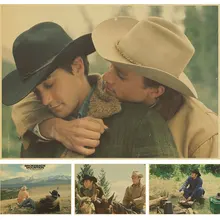
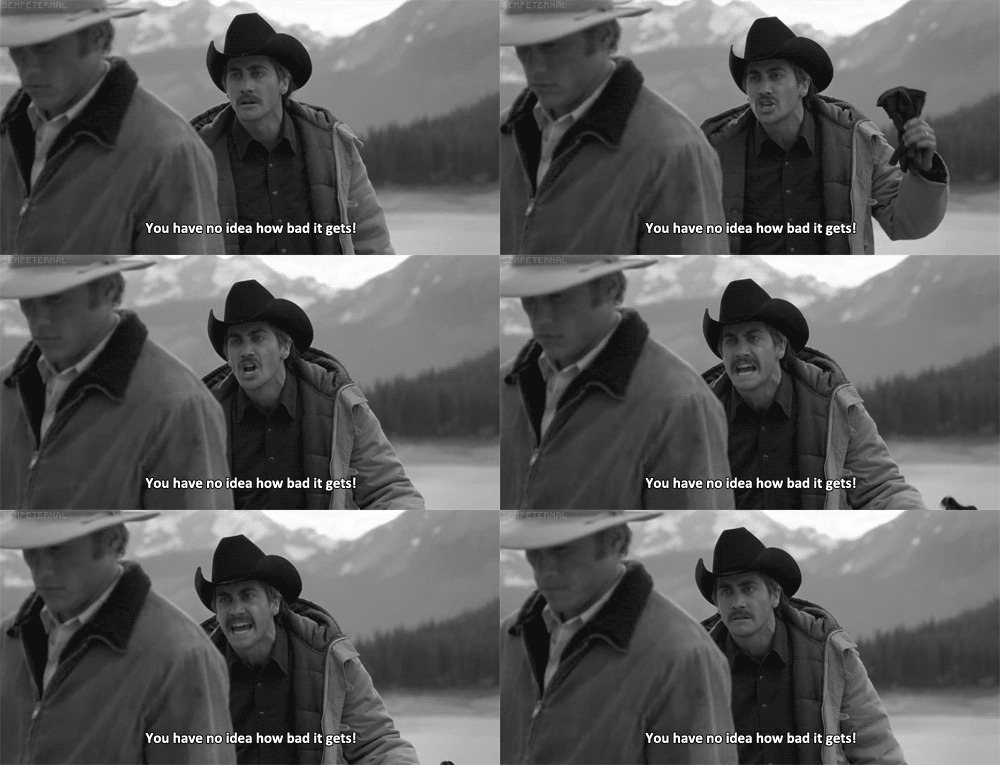
Alcantara, M. H. (n.d.). New Queer Cinema in the USA: Rejecting Heteronormative Categorisations in Desert Hearts (1985) and Brokeback Mountain (2005). Retrieved 2019, from https://gredos.usal.es/jspui/bitstream/10366/125911/1/Mª Teresa Hernández Alcántara TFG.pdf
Creekmur, C. K., & Doty, A. (1995). Out in culture: Gay, lesbian, and queer essays on popular culture. Durham: Duke University Press.
Lee, M. M., & Lee, R. E. (2006). The Voices of Accepting and Supportive Parents of Gay Sons. Journal of GLBT Family Studies,2(2), 1-27. doi:10.1300/j461v02n02_01
Minton, H. L. (1997). Queer Theory. Theory & Psychology,7(3), 337-353. doi:10.1177/0959354397073003
Smelik, A. (1998a). And the Mirror Cracked: Feminist Cinema and Film Theory.
Tamagawa, M. (2017). Coming Out of the Closet in Japan: An Exploratory Sociological Study. Journal of GLBT Family Studies,14(5), 488-518. doi:10.1080/1550428x.2017.1338172
West, I. N. (2018). Queer Perspectives in Communication Studies. Oxford Research Encyclopedia of Communication. doi:10.1093/acrefore/9780190228613.013.81




 collision of ideas